Tuesday, May 29, 2007

Caterpillars and Standardized Curriculum


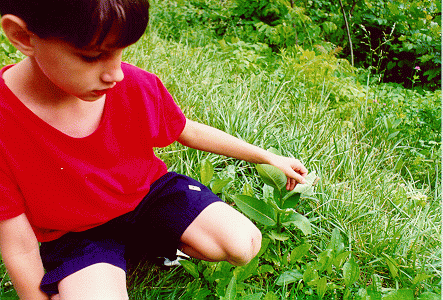
the other day i was helping some folks with some crafts at an outdoor event. It was a beautiful day, the sun was shining, there was a nice breeze, good people. The craft I was working with was block printing t-shirts. There was a mother there with her two kids, maybe around age 8. She really wanted to do the t-shirts and seemed to think the kids should want to do it too. At the same time, she wanted the shirts to be perfect, so she would only let them help by pressing on the block once she had painted it and placed it. The kids were interested in the caterpillars. there were dozens of caterpillars, hanging from the trees, landing on people's heads, crawling on everything in sight. They tickled when they were on your skin, and if you didn't keep track of them they would crawl all the way up your arm and onto your back. Collecting them one by one the two kids created little families of caterpillars that they would watch vigilantly. The mother, frustrated by her kids lack of interest in the block printing would force them to remove the caterpillars in order to help her press down on the blocks. This juxtaposition of the mother's desire for perfect "kid made" shirts, and her children's interest in the caterpillars made for some tense moments. As a spectator I worried about the missed learning opportunity and the squashed curiosity.

Not wanting to be critical of the mother without looking at myself I thought of my teaching. How many times do I shut down the curiosity of my students by forcefully redirecting their attention to something they have no interest in? Is it any wonder that students hate school, or learn to stifle their questions, their natural desire to learn? Genuine, authentic, and memorable learning happens when education responds to the curiosity of students. Teachers face many challenges in doing this. The structure of schools and of the school day puts huge limitations on a teacher's ability to have a creative, responsive classroom. Standards, created by businessmen, professors, and politicians and enforced by legislation like No Child Left Behind squelch the learning experience of students throughout the country having a greater impact in schools that are already struggling with inadequate resources. To make education authentic in this country we must drastically change our methods of teaching so that we are no longer forcing children to put down their caterpillars and climb into a box that fits our ideal of who and what they should be.

Friday, April 20, 2007

Teaching Courage and Action

Liz Davis, a drafting teacher in a Washington DC Middle School has turned her classroom into a center of self-discovery and activism. She is a small woman, with a commanding presence. At the beginning of this year when she found herself in a basement storage room that hadn't been used for fifteen years, with a decaying rat in the corner and asbestos from demolition efforts in another part of the building swirling in the air, she gave her students cameras, she taught them how to draft letters, and she took them to school board meetings. Three months later the school got moved to a different building and Ms. Davis got moved to a different school. Principles in the DCPS are afraid of her, they threaten to retire if she is transferred to their schools. And she is afraid of them. But that fear is overcome by her drive to give students a fair and decent education in a healthy asbestos free environment.

Beyond this she incorporates writing in her drafting classes. The students write about who they are, where they come from, what their hopes and dreams are. In her classroom is a sign that says, “Writing is...mind traveling, destination unknown.” Her students have a clear love and affection for her. She has ways of insisting that they all stand up for themselves, sometimes literally. In all of our school visits she was the only teacher that insisted that every student introduce themselves to us, after we had introduced ourselves to them. Yes, it took time out of class, the students were squirming in their seats, half of them had to be asked to speak louder. What a beautiful thing though to be asked as a middle schooler to be louder, not quieter.

So at the high school i am interning at I have yet to find a deteriorating rat in the corner, and I don't know of any asbestos problems, but I have seen teacher detentions where the students are treated almost as animals. I have seen students yelled at for looking out the window or rolling their eyes. There are military recruiters in the halls, and more importantly outside where kids who don't have cars wait for the bus, or a ride, or just hang out after school. I have talked to students who tell me that the “haves” and the “have-nots” are definitely treated differently, that some teachers know who the beautiful ones are and they talk to them more. I have seen department videos that make an almost seamless connection between the human beings that live in Africa and the wildebeests. The toxicity of of the high school is not anything that could be found with the instruments of natural science, but it is just as deadly and my students could still investigate it. They could still speak out about it. We could critique the videos and DVDs in the social studies department and demand that some be removed and others purchased. They could observe student detentions, track those who are assigned to ISS (In School Suspension), question the administration's actions, demand something better.

On a personal note there is the fear question. I have acted as a silent witness to most of the things described in the above paragraph. Students have looked to me with pleading eyes, asking to be treated as human beings and I have responded in silence and eyes that plead for some sort of forgiveness. I must find a way to act in the fear, because the fear of what is happening in this world must be greater.

Wednesday, April 11, 2007

Dignity Defense in an Offensive World

A New York Times article covering a press conference held by the Rutgers women's basketball team today showed more defense than offense. While the headline "Rutgers Women Show Anger, but Agree to Meet Imus" brings back stereotypes of angry black women, the article itself spends more print on defending the worthiness of African American members of the team by highlighting grade point averages, community involvement and music playing abilities than on attacking offensive statements made by Imus...

Stringer noted that the team had a combined B-plus grade point average. “Let me put a human face on this,” she said. “These young ladies are valedictorians of their class, future doctors, musical prodigies and, yes, even Girl Scouts. They are all young ladies of class. They are distinctive, articulate.”

I find this defensive strategy strange when what really needs to happen is an attack on the racism that breeds the kinds of comments that Imus made. The statements made by the women on the team were not in denial of the names they had been called, they were a defense against all the things we believe about black women and in having to make that defense they prove that the racism and sexism behind Imus's words still exists.

On the other end we seem to be struggling with how to go about punishing Imus, and I would suggest that it is because we are missing the point. Imus and MSNBC may be easier targets for our upset, he can be fired, advertisers can withdraw (and are withdrawing) their ads. But how can you attack words? those were what we all found so offensive right? Again, we miss the point, it was the racism and the sexism that we found so offensive. Attacking, or erasing those is a much bigger job than can be done in the two weeks this incident will stay in the news cycle. More importantly it is a job we all have to do, we can't just point a finger at someone else's offensive language we have to look at ourselves, or education, our beliefs. By publishing an article in defense of the Rutgers team the New York Times was re-enforcing an offense by making an unnecessary defense. The space would have been better used defending the women by making an offense on racism and sexism.

Sunday, April 1, 2007

Drugs, Imperialism and Supremacy


In a recent conversation about how individuals who are confronted with contradictions in the ideology that dominates the United States, a friend brought up the use of prescription drugs as a way of suppressing anxiety, lifting depression. When those who have been a part of the middle class find themselves falling into the ranks of the working class and can't explain why using the "bootstraps" belief we have grown up in, there are several possible responses. One would be a growing class consciousness, or understanding of the lines that divide and reproduce class in our country. Another response would be drugs. Prescription drugs can be the perfect anesthetic to the pain of the contradiction of a supposedly classless society. These thoughts took me back a few years to when I was working in a youth crisis shelter in Washington DC. Nearly half of the youth we served were medicated for some psychological or neurological ailment. When youth had to go off medication because of pregnancy, or simply running out of pills everyone would brace themselves for the "real person" that they would be confronted with. Suddenly I saw this as an effort of middle class institutions to suppress the class consciousness of the proletariat, or working class. From here my mind jumped to the spread of western medicine to the rest of the world. Medicine in the literal sense, but also in the figurative sense of prescriptions for structural adjustment plans, open markets, and cash crops. These solutions, like the drugs given to inner city youth, create much more harm than good. they also shift the focus of blame from social inequality and the forces that create it, to some sort of personal sickness, whether it be the mental/emotional ailments of a youth or the structural failings of a country and its people. Obviously these ideas are still forming in my head, any evidence, supporting or negating thoughts are welcome...

Monday, March 26, 2007

Grocery Store Clerks and Hair Nets


The summer after I graduated from college I took a job stocking shelves at our local supermarket. For the most part i enjoyed the activity of the job and the atmosphere of the store, however, I also felt shame for working there. I felt that as a college graduate and the daughter of middle class parents I should be beyond such low-skilled labor. My interactions with my friends at the store and friends of my parents exacerbated this sense of shame. The first few days I would say hello to anyone I knew or recognized. The responses I got were looks of surprise, mild disgust, and sometimes silence. I soon realized it was easier for me to try to hide from those I knew, or pretend that I was very busy than greet them. They seemed to have no problem "not seeing me" or ignoring me if they did see me. I got the message loud and clear that there was something wrong with me working there and that shelf stockers in stores are and should be invisible.
Several months ago I started another "working class" job. This time I am delivering trays at a hospital. I wear a uniform that consists of some not very flattering pants, a polo shirt that is too big, an apron and a hairnet. I almost always have on bright blue gloves, and I might have more education than any of my supervisors. My co-workers are all high school students, one of whom is in my class. I was surprised when I started this job to feel the distant but familiar pang of shame that I had felt at the super-market.
Especially with the super-market situation I am painfully aware of how invisible the workers are. Sometimes they are not seen, other times they are discounted. People rarely regard cashiers as community leaders, or persons of status. The other day I was volunteering in our local co-op, stocking the shelves and my mentor teacher walked right past me without even seeing me. When I stopped her and said hi, she said she hadn't seen anyone at all. This invisibility is bad enough, but it goes far beyond that. How do we react when someone tells us they are a fast food worker, or a custodian? What about kids at school whose parents hold these jobs? do they ever learn about heroic acts of people like their parents in text books? Does anyone ever want to be what their parents are? How do these prejudices impact who gets to make decisions in our society and who doesn't? How well do we hear what a cashier says to us once we have found out the price? It is time we start dismantling these class hierarchies in our heads, and start to value work, and more importantly human beings. I have a long way to go on this, and as a teacher the urgency is great. Take some time, mull if over, share your thoughts. There will be more on this later... we need to go a few levels deeper, just wanted to get a start...